Item Pool Management System
Reducing 40 Hours of Manual Work Per Client Request
The Problem
Intellectual Technology's SaaS platform powers driver testing for multiple states. Each state has unique requirements, and clients frequently request content changes to the item pool (test questions, media, translations).
The existing workflow was entirely manual:
- ~40 hours of Business Analyst time per client request
- High error rates across languages, media formats, and test configurations
- No version control or audit trail
- Process didn't scale—every new client multiplied the burden
Constraints
- Tight integration with existing product architecture
- Zero client-billable hours for development
- Support for multiple languages, media types, and test configurations
- Clear version control for compliance and auditability
My Role
I partnered with product, engineering, and QA as the embedded designer. I led workflow analysis, interaction design, wireframing, prototyping, and component definition. I facilitated stakeholder sessions to align on priorities and worked directly with frontend developers on implementation.
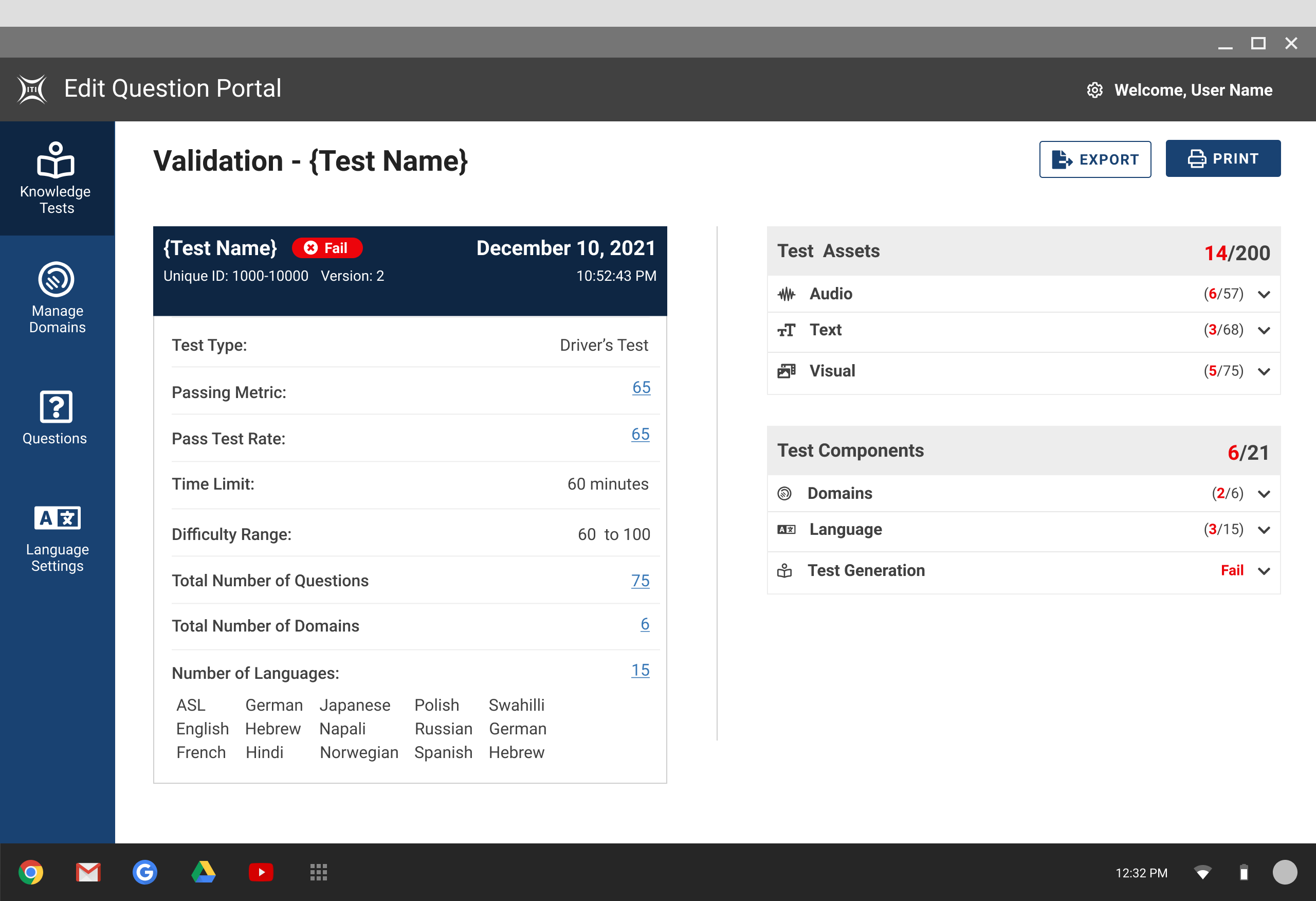
System Interface Gallery



The Solution
I redesigned the system around three principles: consolidation, separation of concerns, and reusability.
Unified interface: Replaced fragmented actions with a single management view.
Workflow stages: Clear separation between content creation, validation, and publishing.
Scalable patterns: Designed components that handled languages, media, and configurations without custom logic per client.
Version-aware flows: Built traceability into every action to reduce errors and support compliance.
The Outcome
- Manual effort per request dropped significantly.
- Error rates decreased through structured validation.
- Faster client turnaround unlocked new revenue opportunities—item pool changes became a billable service.
- Internal teams gained confidence managing complex updates at scale.
What This Shows:
Internal tools deserve the same rigor as customer-facing products. By eliminating redundancy and designing for reuse, I turned a cost center into a revenue stream.